
- Staton coating
- Blog
- The advantage of PVD coated coin dies
Global coating solutions
The advantage of PVD coated coin dies

These days, a large portion of industrial coatings are effectively made using a range of standard vacuum deposition methods that make use of physical processes like sputtering and evaporation. The following are just a few benefits that PVD coating options for tools offer:
- increased hardness, toughness and wear resistance
- decreased coefficient of friction
- increased temperature stability and oxidation resistance
- increased chemical inertness
PVD coating specifications for forming tools are generally the same as those for cutting tools. However, while high hardness is only partly important, it is crucial that the coating surface is smooth and anti-sticking. To understand, how PVD coatings enhance the performance of a coin die, we need to look into processes of coin dies fabrication and coin minting.
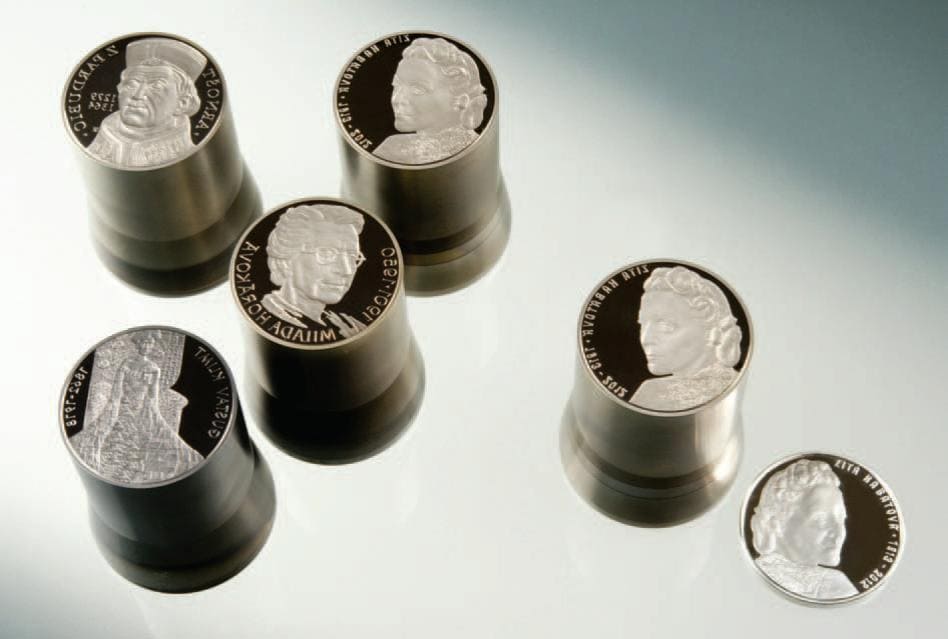
What is a coin die?
A coin die is a specialized metal stamp that is used to create coins. We can imagine it like a metal rod with a flat face the size of the coin it will create. There are two dies involved in the process, each one carrying an inverse image of the design that needs to be imprinted on the coin. One die has the design for the heads (obverse) side of the coin. The other die has the design for the tails (reverse) side of the coin. When a blank piece of metal is placed between these two dies and struck with high pressure, the designs from both dies get imprinted onto the metal, creating a new coin.
How a coin die is fabricated?
Fabricating a coin die involves a multi-step process, ensuring intricate details are precisely transferred onto the final coin. The key steps are:
- Master Hub Creation: Artists create the coin design, but for die making, a mirrored version (like a photo negative) is needed. This mirrored design gets engraved onto a specially made steel piece called a master hub using techniques like computer-controlled milling machines.
- Transferring the Design: The master hub acts like a mold. Red-hot, round steel blanks are placed in a hubbing press. This press applies immense force (up to 265 tons!) to push the master hub design onto the blank die, creating a “master die.”
- Working Die Production: Master dies are used to create the final working dies used for coin production. Similar to step 2, the master die presses its design onto another round steel blank to create working dies.
What material is a coin die made from?
While historically, other materials like iron and even bronze were used, modern coin production relies heavily on the superior properties of hardened steel. For creating long-lasting and high-quality dies, the hardened steel meets the following requirements:
- Strength: Steel is strong and can withstand the immense pressure (hundreds of tons) exerted during the coining process without breaking or deforming. This ensures the intricate details of the design are sharply transferred onto the coin.
- Durability: Coin dies need to last for a long time, producing hundreds of thousands of coins before needing replacement. Hardened steel is highly durable and resists wear and tear from the constant striking.
- Precision: Steel can be precisely machined and polished to create a smooth surface that accurately reflects the design details. This allows for the sharp and clean transfer of images and lettering onto the coin.
How the surface of a coin die is treated?
The surface of a coin die undergoes several treatments to achieve two main goals: precision in transferring the design and durability to withstand the high-pressure minting process. First the surface is polished. This is a crucial step to create a smooth and reflective surface on the die. A polished surface allows for the sharp and accurate transfer of the design details, including fine lines and lettering, onto the coin blank. After polishing, the die undergoes hardening. While the die body is made from strong steel, the surface needs additional hardening to resist wear and tear from the constant striking. Common techniques include, carburizing or nitriding when the die surface is exposed to a carbon/nitrogen-rich environment at high temperatures. This process increases the carbon/nitride content in the outer layer, making it harder and more resistant to deformation. In many cases, especially for high-value or high-volume coins, additional advanced coatings are applied to further improve performance. The specific treatments used on a coin die depend on factors like the type of coin being produced, the desired level of detail, and the expected production volume. By combining polishing, hardening techniques, and advanced coatings, mint operators can create coin dies that produce high-quality coins for extended periods.
The lifetime of a coin die
The quality and reliability of coin dies depend on the chosen material, the thermal treatment used during the production of the die and finalization, and the treatment of its functional surfaces. The use of the dies during stamping affects its intrinsic material properties, and degradation occurs after some time. Several factors influence the lifetime of a coin die, impacting how many coins it can produce before needing replacement. The factors can be divided into three groups: Material properties, Die manufacturing techniques, and Minting process. In addition to this, the Usage and Maintenance play an important role. By optimizing these factors, mint operators can significantly increase the lifespan of coin dies. This translates to cost savings from fewer replacements and ensures consistent quality in the produced coins.
Material Properties:
- Steel Quality: The type and quality of steel used for the die body significantly affect its lifespan. High-grade steel with superior strength and wear resistance can withstand more strikes before showing signs of wear.
- Hardness: The surface hardness of the die plays a crucial role. Hardening processes like carburizing/nitriding and plasma deposited hard coatings create a tougher exterior that resists the impact of striking metal blanks.
Die Manufacturing Techniques:
- Polishing: A well-polished die surface minimizes friction during minting, reducing wear on the design elements. A rough surface would wear down faster.
- Coatings: Applying specialized coatings like chromium or titanium nitride and boride significantly enhances surface hardness and wear resistance, allowing the die to handle more strikes.
Minting Process Conditions:
- Lubrication: Proper lubrication between the die and the metal blank reduces friction during the minting process, minimizing wear on the die.
- Press Calibration: A precisely calibrated coining press ensures the striking force is evenly distributed, minimizing unnecessary stress on the die that could lead to cracks or fractures.
Usage and Maintenance:
- Number of Strikes: The most significant influence is simply the number of times the die is used to strike coins. Each strike subjects the die to wear and tear.
- Regular Inspection: Early detection of wear through regular inspections allows for potential repairs or replacement before significant damage occurs.
- Cleaning and Polishing: Periodic cleaning and polishing can remove debris and maintain a smooth surface, reducing wear on the die.
- Annealing: Over time, dies experience work hardening, becoming more brittle. Periodic annealing (heat treatment) softens the steel and restores its ductility, allowing it to last longer.
Proof coins
Even higher requirements are put on the coin die when proof coins are minted. Proof coins are not created using special dies, but rather through a special minting process with several important aspects. While standard dies are polished, proof coin dies are given an extra level of polishing to create an even smoother and more reflective surface. Regular coins are typically struck once. In contrast, proof coins undergo multiple strikes with carefully controlled pressure to ensure a sharper and more detailed transfer of the design. The metal blanks (planchets) used for proof coins are specially selected and treated to ensure a flawless surface free of blemishes. Any imperfections on the planchet would be amplified in the finished proof coin. The pressure used to strike proof coins is precisely controlled to create a high-relief effect with sharp details and a mirror-like background. In essence, while the die itself might not be fundamentally different, the meticulous attention to detail throughout the minting process elevates proof coins to a higher quality standard compared to circulation coins. Coating of the functional surfaces of circulation coin dies using specialized hard PVD coatings can substantially increase the performance and extend the lifetime of the die. Nevertheless, it is optional. On the other hand, coating is a must when stamping coins with a PROOF quality.
Coin dies for silver
While coin dies for silver generally face the same challenges as dies for other metals, there are some specific issues that can be more pronounced due to silver’s properties. Silver, being a softer metal, can adhere slightly to the die surface during minting. This can lead to imperfections on the finished coin, such as faint lines or a lack of crispness in the design details. Silver’s softness can cause the die to wear down slightly faster compared to harder metals like gold. The high polish needed for quality coins can be more challenging to maintain on dies used for silver. Silver can “fill in” the microscopic grooves created during polishing, reducing the effectiveness of the polish and potentially impacting detail transfer. To address these problems several precautions can be taken:
- Optimized Polishing Techniques: Mint operators may use specialized polishing techniques or polishes formulated for softer metals to maintain a smooth and effective die surface for silver coins.
- Design Considerations: For high-detail silver coins, designers may need to consider a slight simplification of elements or a larger coin size to accommodate the potential for faster die wear compared to harder metals.
- PVD Coatings with Anti-Sticking Properties: PVD coatings can significantly reduce sticking and improve detail transfer. Additionally, some advanced PVD coatings incorporate low-friction materials for even better anti-sticking performance.
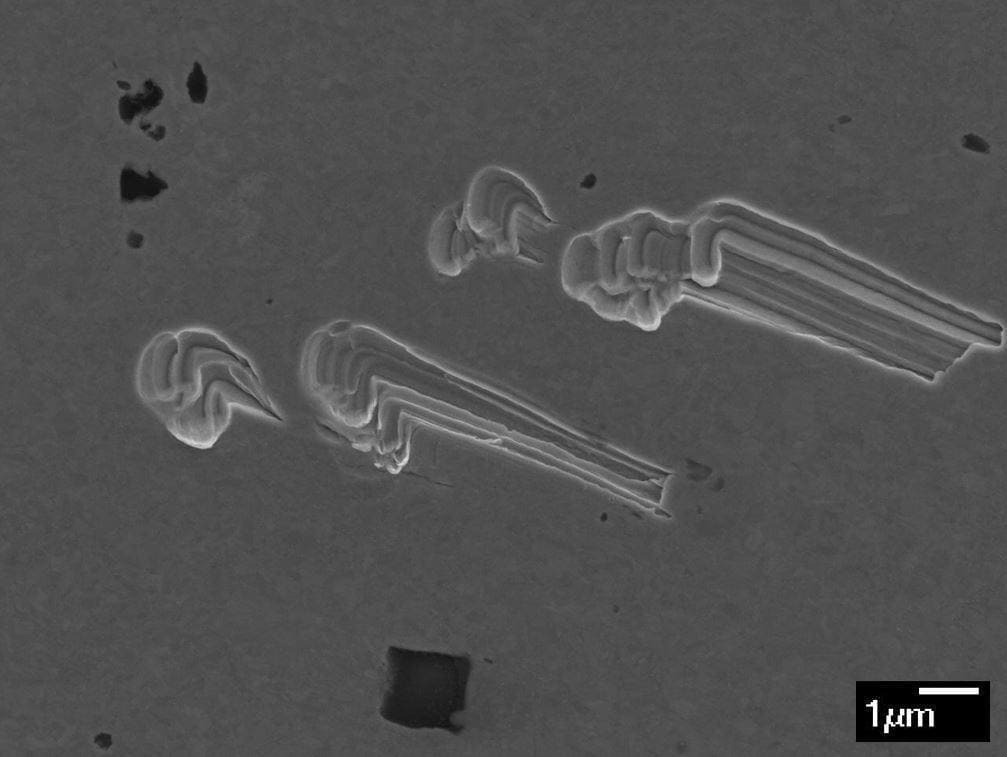
Coating of a coin die
Coin die coating refers to applying a specialized thin layer of material to the surface of a coin die. This coating serves two main purposes: Enhanced durability and Improved coin quality. The primary function of a coin die coating is to increase the die’s lifespan. During minting, the die faces immense pressure as it strikes the metal blank to create the coin design. Over time, this repeated striking can cause wear and tear on the die surface, leading to a loss of detail sharpness and eventually requiring replacement. Coatings made from exceptionally hard materials like chromium, titanium nitride, or titanium diboride significantly improve the surface hardness and wear resistance of the die. This allows the die to withstand more strikes before needing replacement, resulting in cost savings for mint operators. A secondary benefit of coin die coating is maintaining the quality of the minted coins. As a die wears down, the sharpness of the design details on the coin can become dull. Coatings help the die maintain a smoother and more precise surface for a longer period. This translates to higher quality coins with crisp details and lettering. Overall, coin die coating is a crucial technology in modern minting. By extending die lifespan and maintaining detail quality, coatings contribute to efficient and high-quality coin production. The most common types of coin die coatings are: Chromium plating and Physical vapor deposition.
Chromium plating is a traditional and cost-effective method. Chromium offers good hardness and corrosion resistance. This method belongs to the so-called wet processes, as the coated die is immersed in a bath with a liquid electrolyte. A disadvantage of chromium plating is that the most used electrolytes contain hexavalent chromium, which is considered toxic, rendering it a major health risk both in manufacturing and disposal.
Physical vapor deposition is a dry, vacuum process which opts for environmentally friendly alternatives to traditional chromium plating. This technique allows for a wider variety of coating materials and precise control over thickness. In addition, it provides much higher values of hardness and wear resistance as well.
What is Physical Vapor Deposition?
Physical Vapor Deposition (abbreviated PVD) is a widely used technique for thin film deposition. It is a dry, vacuum, plasma-assisted process in which the atoms from a solid target are transferred to the surface of various substrates, where a thin film is formed. The thickness of the film can range from a few nanometers to several micrometers. Among PVD methods, the most common are vacuum evaporation, arc evaporation, and magnetron sputtering. Moreover, novel progressive techniques are often used, such as High target utilization sputtering (HiTUS) or High power impulse magnetron sputtering (HiPIMS). In general, PVD coatings have excellent adhesion to the substrate, and the technology is capable of depositing a wide variety of materials. The target can be a single-element material or a compound with a certain composition. PVD also enables reactive deposition, where the target material reacts with the feed-in gas and forms a compound coating directly on the substrate. In the context of coin dies, PVD coatings offer several advantages over traditional methods like chromium plating, such as:
- Superior Hardness: PVD allows for the deposition of extremely hard materials like titanium nitride (TiN), chromium nitride (CrN), or titanium diboride (TiB2). These coatings are significantly harder than chromium plating, offering exceptional wear resistance. This translates to a much longer lifespan for the coin die, meaning it can produce millions more coins before needing replacement.
- Enhanced Performance: PVD coatings can be tailored to specific needs. For example, some coatings offer improved anti-sticking properties, reducing friction between the die and the metal blank during minting. This further minimizes wear on the die and can even lead to improved coin quality with sharper details.
- Environmentally Friendly: Traditional chromium plating uses hazardous chemicals. PVD coating is a dry, vacuum process that does not involve chemicals and does not produce liquid waste. Therefore, PVD is often considered a “greener” alternative compared to wet processes like chromium plating.
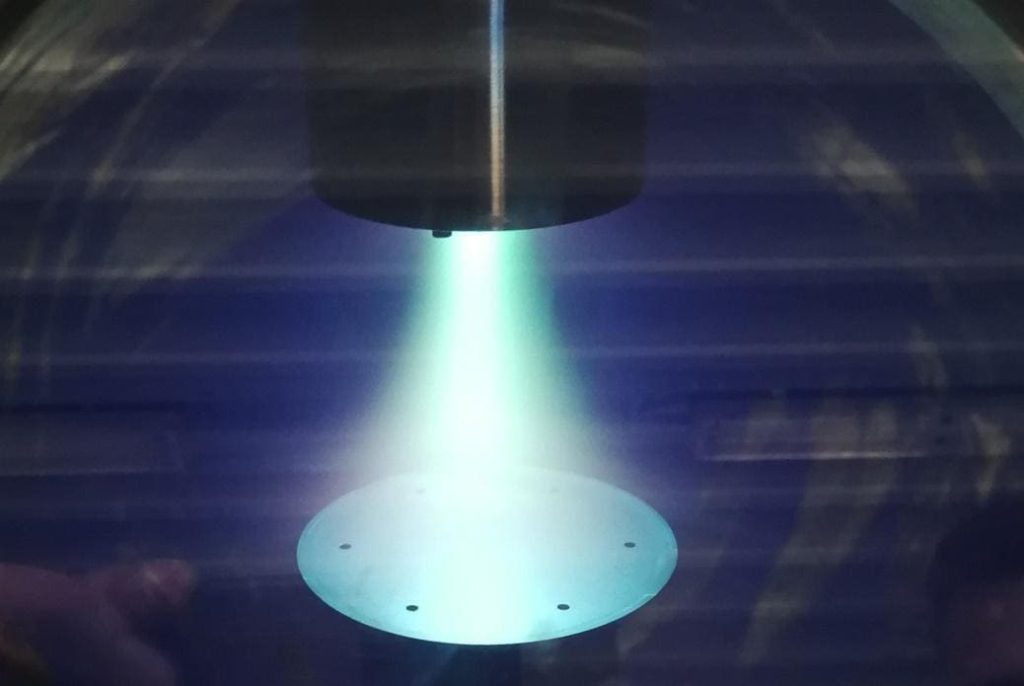
PVD enables the deposition of a variety of materials, allowing the design and production of a wide range of functional coatings. The coating, consisting of a specific material, can be tailored to exhibit desired properties (hardness, toughness, friction coefficient, adhesion, etc.) by altering the deposition parameters or doping the primary material with other elements. Additionally, multi-layered and nanostructured coatings are easily fabricated using PVD technology, further enhancing mechanical properties. Common coatings include:
-
- Titanium Nitride (TiN): This widely used and versatile PVD coating is known for its exceptional hardness, wear resistance, and good anti-sticking properties. It’s a cost-effective option that can significantly improve the performance of coin dies [1].
- Chromium Nitride (CrN): Similar to TiN, CrN offers excellent hardness, wear resistance, and anti-sticking properties. It can be a suitable alternative to TiN, depending on specific requirements [2].
- Diamond-Like Carbon (DLC): This category of PVD coatings includes various carbon-based films with exceptional properties. Some DLC coatings are specifically formulated for low friction and high wear resistance, making them ideal for applications requiring anti-sticking properties [3].
- Titanium Diboride (TiB2): TiB2 is a relatively new and promising material for coin die coatings. It is an extremely hard ceramic, potentially harder than commonly used coatings like TiN or CrN, offering superior wear resistance. TiB2 also exhibits excellent thermal stability and resistance to corrosion and wear from lubricants, making it ideal for high-volume production [4].
- Composite Coatings: Advanced PVD techniques allow for the deposition of multi-layered coatings [5]. By combining materials like TiN with a low-friction element like molybdenum disulfide (MoS2) [6], engineers can create coatings with exceptional anti-sticking properties while maintaining good hardness and wear resistance.
The lifetime and productivity of coin dies used for stamping circulation coins can be improved more than twice using hard CrN PVD coatings compared to conventional galvanic Cr-plated dies. Highly specialized TiCrN-based PVD coatings developed for stamping circulation coins offer even more impressive results, improving the die’s effectiveness by more than nine times compared to conventional Cr-plated dies [7].
For dies intended for PROOF silver and non-ferrous coins and medals, specialized TiCrN-based nanostructured coatings developed using magnetron sputtering technology have proven highly effective. These coatings prevent common defects like cracks and pinholes during silver coin stamping, resulting in clearer, higher-quality PROOF coins. Furthermore, they increase die lifespan by up to six times compared to conventional Cr-plated dies [7].
Overall, PVD is an extremely versatile and advanced coating technique that plays a crucial role in modern coin die manufacturing. It significantly extends die lifespan, improves coin quality, and offers a more environmentally friendly alternative to traditional methods.